Welcome to New Subscribers Plus Resources for All

First, a big thank you to all those who opted into my newsletter through the Let’s Go!: A Kids Comics Studio Anthology. And a thank you to those of you who’ve been following me for a while.

This isn’t the post I intended to write, but I have two time sensitive opportunities I wanted to share.

The first is for kidlit graphic novel creators, or those who want to create graphic novels, or even anyone interested in marketing tips. Literary agent Janna Morishima is hosting a free masterclass tomorrow titled “How to Launch Your Graphic Novel” and today (Sept. 26) is the last day to sign up. Even if you miss this, she will be holding a in-depth course on the same topic, so follow her site for details. (Update, you can now access the full course at: https://kidscomicsunite.com/how-to-launch-your-graphic-novel/)

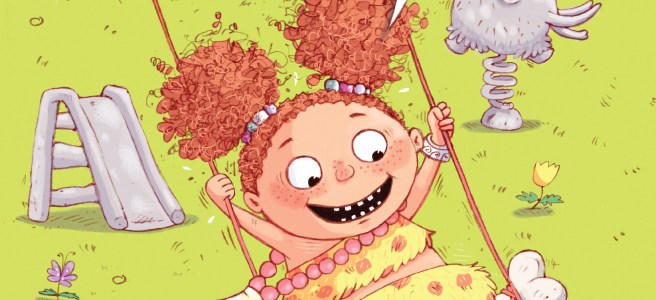
Art by Jade Vaughan for Kids Comics Unite

Second: The KidLitGN pitch event opens to agents, editors, and publishers in five days (Oct. 1). However, unagented and agented creators who have comics-style picture books, early/chapter, middle grade, or YA graphic novel projects can begin loading their pitches as soon as Sept. 28 at 8 a.m. The pitch window closes at 11:59 p.m. on Oct. 1.

Most of my original followers came from my picture book connections, so I want highlight the opportunity to pitch comics-style picture books (listed as Graphic PBs on the website) in the KidLitGN pitch event (think picture books with sequential art like Mr. Particular or Toys in Space).

Continue reading

Behind the Scenes of “Runaway Train”

Tech and time weren’t my friends this week, but I did manage to mostly edit a video that I’m excited to share because it shows the evolution process of the script for “Runaway Train,” my and Maggie Shang‘s collaboration for the Let’s Go!: A Kids Comics Anthology. But instead of having all the cool captions and corresponding pictures added to the video, I ran into tech issues that I couldn’t solve in time to tag team with Maggie’s post about her process.

So here’s the video with loads of info about how we started our collaboration, how the scripts changed over time, Maggie’s artistic decisions plus really valuable insights she learned along the way, my scripting decisions, and what I learned from the comic’s scripting process for this anthology project. For the time-limited among us, I’ve included time codes and supplementary graphics and info below. I hope you have as much fun watching this video as Maggie and I did making it.

Time Codes:

Continue reading

Crafting Graphic Novels: A Writer’s POV

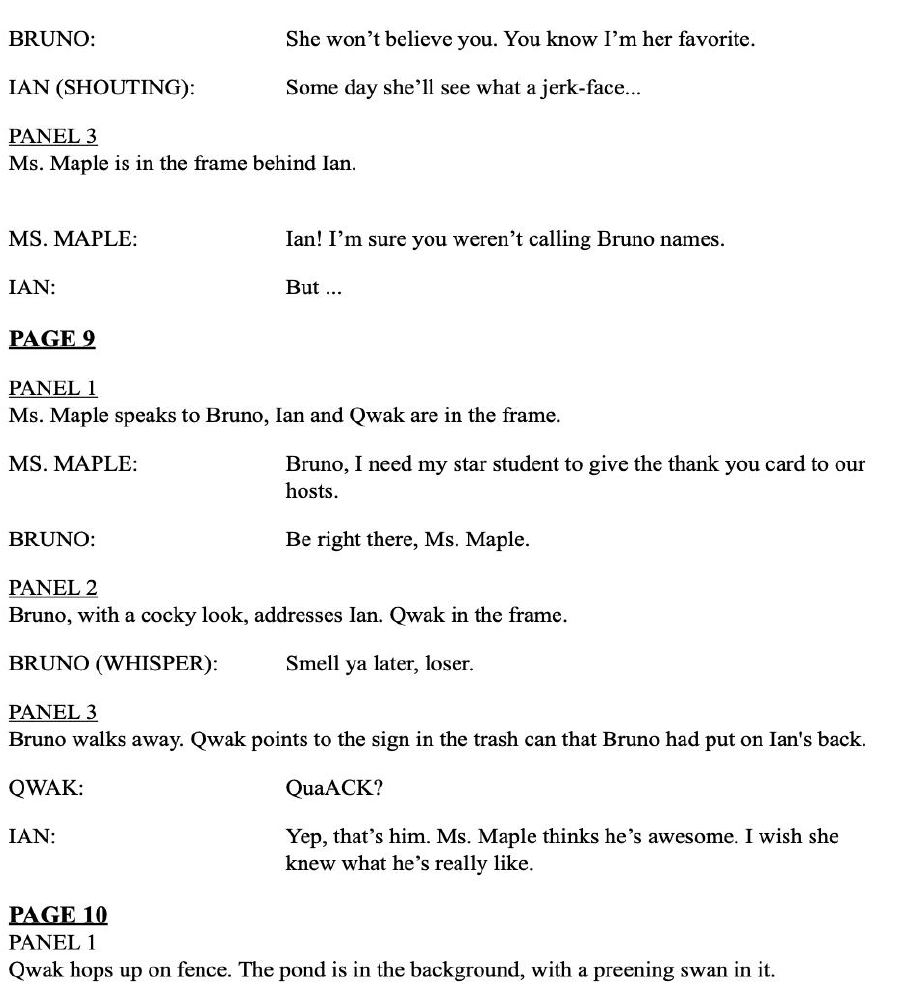
Ian & Qwak: script by J. DeWitt

One of the most popular posts on my website relates to illustration notes for picture books. My first kidlit love was picture books, but after writing several picture book drafts that skewed longer and older but still needed art to tell the story, I knew graphic novels were a better format.

Writing picture books is a good lead into writing graphic novels, but there are differences. Collaborating with two illustrators on the Kids Comics Studio anthology has helped me better understand how to write comics-styled scripts.

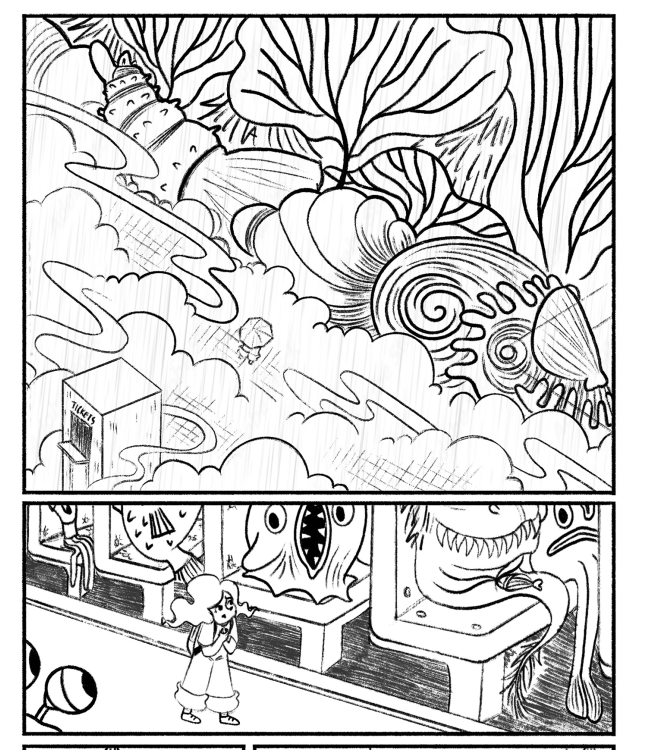
“Runaway Train” is the short comic that Maggie Shang and I have collaborated on for the anthology.

Runaway Train: art by Maggie Shang

This script underwent several changes to fit it into the 8-page limit. I would write, Maggie would draw, and once we had the two together, we would find that the pacing of the art and the story weren’t fitting within the space constraints (a reality for many projects). We went through a few drafts until we were both comfortable with the outcome. Major props to Maggie for all her drafts.

My take-aways from this experience:

Continue reading

Show, Don’t Tell with Author Karla Valenti

K headshotAs one of my critique partners, Karla has been a huge part of my writing journey. I can say with experience that she gives excellent and thorough advice. And luckily, she’s agreed to share some of that here, along with the chance to win her new picture book, Marie Curie and the Power of Persistence, a story about science and perseverance that’s definitely needed right now. See the details below on how to enter. In the meantime, enjoy Karla’s sage advice on how to show not tell.


Thank you, Karla!

Thanks for talking about this hard-to-pin-down topic of how to show not tell. With that, I’m going to turn the rest of this interview over to you to explain how to do this.

Johnell – thank you for inviting me on to your site and giving me a chance to launch my Show Don’t Tell blog series. I also appreciate the chance to share a little bit of information about my upcoming debut picture book “Marie Curie and the Power of Persistence.”

What is Show Don’t Tell?

I’ve been doing PB critiques for many years and have read hundreds of manuscripts. Time and again, the two things that come up most often in my feedback is the importance of structure and showing vs telling. Structure is fairly easy to understand, but showing is a lot more elusive and difficult to explain. I always find it easier to simply point out instances of showing (or telling) in my client’s work, and to analyze why those scenes worked (or not). Eventually, my clients begin to internalize these moments and acquire their own instinct for when they were showing vs telling. 

I’ve wanted to do something similar using books that have been published and are accessible to any reader. My hope is that by understanding (and assimilating) these tips, it will become more instinctive in our own work. Cover

I thought I’d start with my book since I know it pretty well. Also, when I wrote it, I was very deliberate about finding ways to show what I wanted to convey so it’s easier for me to point out those instances.

I do want to say, this is simply my opinion and readers are welcome to disagree. I do not claim to be an expert on this. However, to the extent this sheds some light on this very elusive but important storytelling rule, I hope it helps. Continue reading

Interview with Author Chana Stiefel


ChanaStiefel_Head shot_Color.jpgChana Stiefel’s latest picture book, My Name is Wakawakaloch!, made its debut last month and has already charmed its way into the kidlit circles. Chana is graciously giving one reader a signed copy of My Name Is Wakawakaloch!. Please see below for details.

Thank you, Chana, for your time. 

Your newest picture book, My Name is Wakawakaloch!, hit the shelves in August. What was the inspiration for it?

I grew up with a hard-to-pronounce name (click here to learn how to pronounce her name), and I could never find my name on a T-shirt, mug or keychain. People continue to bungle my name every single day. Originally, I wrote a story about a girl named Chana who wanted to change her name to Sue. Her grandmother told her about her namesake, her great grandmother Chana who came to America as an immigrant and was incredibly kind. (Guess which name Chana kept?) My critique partners liked the story and found it relatable, but they felt that Chana should solve her own problem. I agreed, but I struggled with a solution. A few months later, my husband and I were on vacation in the Canadian Rockies. I had read a blog post by my agent John Cusick, who basically said that if you’re stuck on a story, drop your main character into a new setting. While hiking in Banff among rocks and boulders, I thought to myself, “What if Chana was a cave girl?” and “What if her name was something different, like…Wakawakaloch?” I started writing at 5 a.m. the next day. The new pre-historic setting opened up fresh opportunities for storytelling, as well as new language, new dialogue, new characters, and a new set of conflicts and solutions.

MY_NAME_IS_WAKAWAKALOCH_JKT.inddI can relate to Wakawakaloch, you wouldn’t think it, but especially when I travel overseas, my name trips up a lot of people. And there were never any t-shirts for me as a kid. Did you know this story would be relatable to so many kids and adults?  Continue reading

I Remember … or I wish I Did

50601000_2023976517687131_8587025194038591488_n

I recently unpacked my Honors English final–a creative writing journal in which I had to include a prescribed list of poems and stories in order to get full credit. Even though, the stories and poems were all written by a younger me, I felt like I was reading the words of a stranger.

There’s the rub as an adult, we become strangers to our younger selves and forget how everything felt as a child (and even as a youth). But the truth is, our joys and sorrows never get smaller, we just get bigger. And then we forget, altogether, just how big everything felt when we were small.

My youngest came home from school feeling pretty low because her teacher had to get after her for chatting too much with her friend. A simple rebuke ruined her day. I had to squelch the impulse to feign concern and remind myself that to her, this was a BIG deal. In adult terms, it was equivalent of having your boss chew you up one side and down the other for something you knew you shouldn’t have done. (Lilly’s Purple Plastic Purse is a perfect example of this feeling.)

Continue reading

Interview with Author Penny Parker Klostermann

klostermann_pennyPenny Parker Klostermann is the author of There Was an Old Dragon Who Swallowed a Knight and A Cooked-Up Fairy Tale (Random House Children’s Books, illustrated by Ben Mantle). She has an informative website with gobs of great info about poetry and rhyme. She recently made a comment on my art notes post that I thought deserved its own space, so I asked if she’d answer some questions for me. She’s given back to the writing community in so many ways, and I’m grateful she took time out to teach us what’s she’s learned about art notes and rhyme.

Thank you, Penny, for your time!

Note: When I got Johnell’s interview questions, she asked about two things — art notes and rhyme. These are two topics that come up often in the picture book writing community. And these are two topics that I had many questions about when I started writing. 

The ONLY reason I have published books, and that I think I have some insight to share, is that while I asked questions and thought about the answers, I worked on my craft. I don’t feel any advice will make much sense or help you unless you’re constantly working on and improving your craft to apply the advice.

Think about all the advice, rules, and information that we hear about writing picture books: 

  • Word count
  • Voice
  • Character development
  • Plot
  • Theme
  • Pacing and page turns
  • Art notes
  • Queries
  • Arc
  • Etc.

I wouldn’t have gained understanding about any of these things, if I’d just read articles and blog posts and asked questions.

Continue reading

Interview with Agent Lindsay Davis Auld

LindsayAuldWritersHouse

Lindsay Davis Auld is an agent at Writers House and is actively building her list. She represents children’s lit, from board books through YA (see here for more details). She taught fourth grade and worked for Harcourt Children’s Books prior to joining Writers House as Steven Malk’s assistant. She calls two countries home and is open to international clients. (And Ben and Jerry, if you’re reading this, please, make her ice cream flavor idea.)

Thank you, Lindsay, for your time!


You worked at Writers House with Steven Malk a few years ago and launched several successful books before taking time off to move to England and start your family. Now that you’re agenting again, have you changed how you approach your job, or what you look for in a manuscript? 

Yes, it’s been quite an adventure. In a lot of ways, though, I’d say that, even though I’ve certainly learned a great deal from having children and spending lots of time in bookstores in England, I think I’ll always look for the same qualities in a manuscript: an authentic voice, characters that feel real, a world that fascinates me, and a story I can’t put down. 

What path led you to agenting? Have you always wanted to work in publishing? What would you do if you weren’t agenting? 

After college, I taught fourth grade as a member of Teach for America, and I loved reading with my class and trying to find the right book for each child. It made me realize that I’d like to be a part of bringing children’s and YA books into the world. My first job in publishing was at Harcourt Children’s Books. I then joined Writers House as Steven Malk’s assistant, and eventually began building my own list of authors and artists. Steve has always been an amazing mentor, and I feel incredibly lucky to have learned so much from him, and to have now re-joined Writers House.

I have no idea what I’d be doing if I weren’t agenting. Something to do with stories, I would imagine, as I tend to seek out libraries and bookstores wherever I am, just because I like to be around books.

You and I have a similar situation—we sort of live between two countries. Do you work both in the US and in England? Are you open to international clients?   Continue reading

Interview with Agent James McGowan

IMG_3961.jpg

James McGowan is the Literary Assistant and Social Media Manager at BookEnds Literary, and is open for submissions. He’s looking for adult, YA and picture books (see more details in the links below). James is also a picture book writer and understands the process from both a writer’s and agent’s perspective. He is a Friends aficionado–my name not his–and contributes to the BookEnds’ very fun and informative blog.

Thank you, James, for your time!


You started out as an intern at BookEnds Literary before becoming a Literary Assistant and Social Media Manager. What led you into publishing in the first place?

Just like anyone in publishing, a love for books. It took me a while to realize that there were people behind the books working to get them on the shelves (it just never clicked), but once I did, I dove right into the application process and eventually landed an internship at BookEnds.

You’ve done some informative interviews with Jessica Faust on BookEnds’ YouTube channel. Do you have a favorite?

Ha! I actually don’t have a favorite, though Jessica’s rants are always hilarious to me. I will say that they’re a blast to film. Jessica and I have a lot of hilarious false starts that we edit out, which usually end in someone hysterically laughing. And then things click, we put on our quasi-serious faces, and we film our video. We hope they’re both informative and fun, and if anyone reading this has suggestions on what we might talk about, please get in touch!

https://www.youtube.com/channel/UCukLkiCzvK6AIMnYIDqxUug

You have a pretty eclectic mix of what you are looking for: Adult, YA and then a big drop down in age to picture books. Why specifically picture books at the exclusion of most other kidlit?

This is a great question! I recognize that looking for only picture books at this time is a bit unorthodox for a kidlit agent, but as a picture book writer myself, they’re something I am drawn to. I don’t have that same connection to Middle Grade, and I don’t feel I’d be the best champion for those kinds of books. Continue reading

Interview with Author Pam Calvert

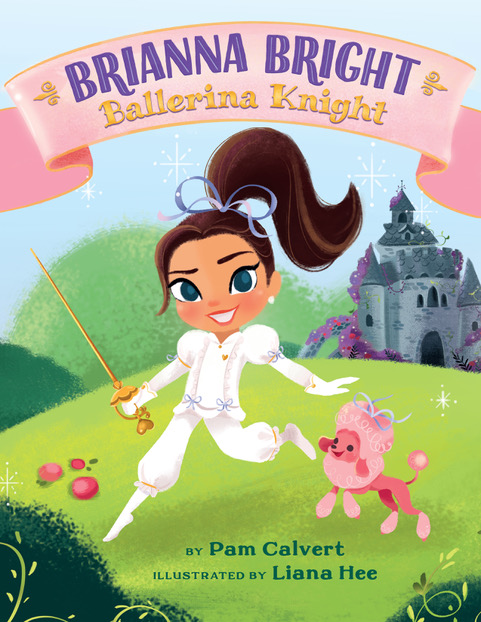
pam5Pam Calvert is a former science teacher turned award-winning children’s author. She’s best known for her Princess Peepers series, but recently launched her new chapter book series Brianna Bright Ballerina Knight, illustrated by Liana Hee. Pam has mentored other writers through the Writing With the Stars mentorship program and through her own informative site, Woven With Pixie Dust. Pam has two character-driven series under her belt and a soon-to-be-third underway. She’s joined us to talk about characters. Thank you, Pam!

What made Princess Peepers a character that could translate across several stories?

She’s a quirky character that has a personality. If you don’t know your character, you can’t write more stories about them. Princess Peepers loves everyone no matter what they look like or who they are. They could be an ugly troll or a tiny dragonfly, she’ll love it. Which is quite different from many people who put labels on things. And that comes through the stories. She also is a people pleaser, which is one of her faults. Your character must have flaws they have to work through to make a story—this causes problems, something every story must have! Also, PP always loses her glasses, one way or another, and this allows for comedic situations that make children laugh when she can’t see what’s going on. Put all that together on top of some of her silly catch phrases, and you have a good series character! 

With Brianna Bright, did you purposefully plan to have a character driven series and if so, how did you go about crafting her in a way from the beginning to ensure that she could last across a series? 

I did. My editor came to me and asked if I could write a strong girl book. She wanted a commercial book, too, which lends itself to series. 

Calvert-BriannaBrightBallerinaKnight-21431-JK-FL-v4.inddSo…I knew ballet books were very popular with girls, and Two Lions didn’t have one. But I wanted to do something different. At the time, I was reading and watching Game of Thrones. Arya Stark, one of the characters, was this strong princess type character that didn’t want to be in frilly dresses. She wanted to be a knight like her brothers (they didn’t call them this in the story but that’s basically what they are.) That gave me the idea to make my ballerina princess into a knight as well. I worked backward to create the story with what if’s…what if a clumsy ballerina also wanted to become a knight? What would happen? How would she go about finding her way? Then the story basically wrote itself. 

The key to a great story is an even greater idea. Giving my ballerina princess a sword had never been done before. Sure, there’s princess knights out there, but there’s only ONE princess ballerina knight. That’s Brianna Bright. Continue reading