Magic in the Ordinary

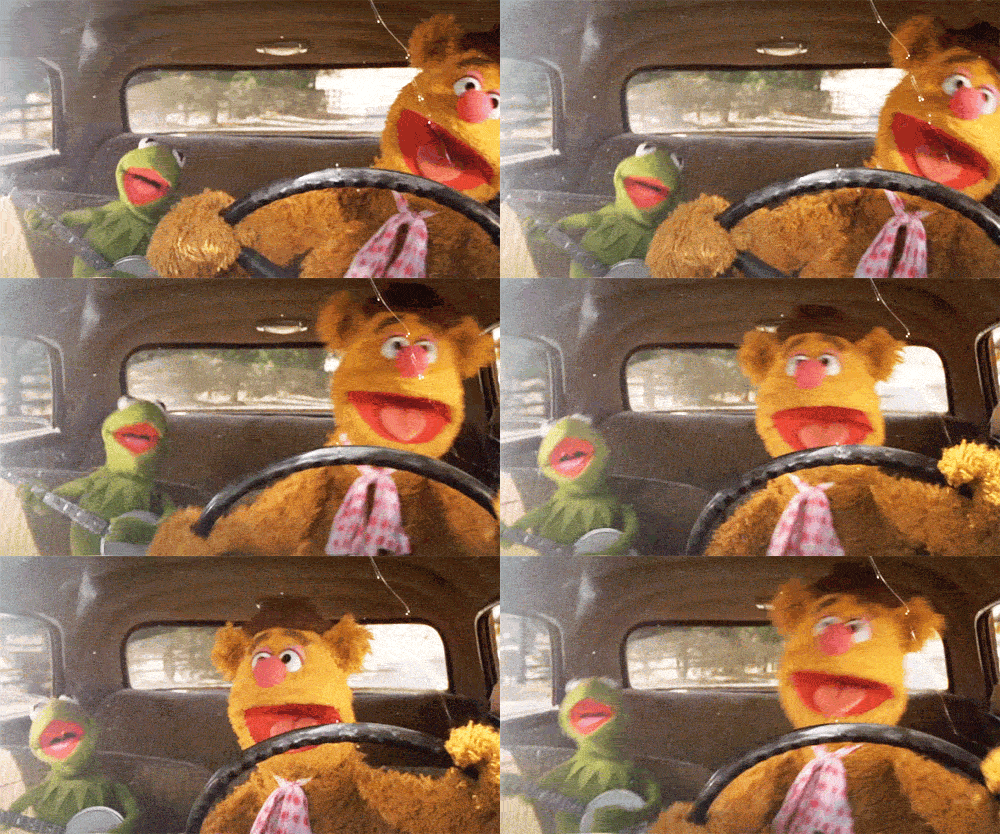
Exhibit A: Evidence that I am NOT an illustrator, and a fun challenge I did through KCU. A “paneling” exercise with my chickens as inspiration. I wanted to test the flow of panels without the rigidity of them.

I fished a rat snake out of my hens’ nesting box before locking them up for the night. A day in the life of a pretend homesteader I guess. To top it off, said snake chose to invade my chicken coop during one of our famous, spontaneous thunder-with-dumping-rain-storms.

Meet Scooby. When we got him as a chick, we didn’t know if he was a rooster or a hen for the longest time, so we named him Scooby–our mystery chick. He’s now much older, much bigger, but still a mystery.

With one hand holding the umbrella, I couldn’t get the snake and hold the lid up, so I trucked into the house to fetch a glove, boots, and a poncho, the latter of which, I remembered too late, was with my daughter at camp. Sigh…

So, not-very-water-proof-hoodie draped over my head and back instead, work glove on, back out to the coop to fetch the snake, boots sloshing in the mini-river shooting down the drive, snake relocated and slithering angrily away, chickens accounted for and locked up for the night, I plowed inside and plopped down to write this post…that I’m just now finding time to edit and publish.

Continue reading

Behind the Scenes of “Runaway Train”

Tech and time weren’t my friends this week, but I did manage to mostly edit a video that I’m excited to share because it shows the evolution process of the script for “Runaway Train,” my and Maggie Shang‘s collaboration for the Let’s Go!: A Kids Comics Anthology. But instead of having all the cool captions and corresponding pictures added to the video, I ran into tech issues that I couldn’t solve in time to tag team with Maggie’s post about her process.

So here’s the video with loads of info about how we started our collaboration, how the scripts changed over time, Maggie’s artistic decisions plus really valuable insights she learned along the way, my scripting decisions, and what I learned from the comic’s scripting process for this anthology project. For the time-limited among us, I’ve included time codes and supplementary graphics and info below. I hope you have as much fun watching this video as Maggie and I did making it.

Time Codes:

Continue reading

Voice: “Your picture book sounds too old.”


In writing, you will hear about “voice,” but you won’t often get a clear answer as to what that means. That’s because it’s one name for many different things. It’s like saying “smurf” in the old Smurf cartoons—it means a different thing depending on how you use it.

I could address “voice” in a dozen different ways. I could talk about how each author is encouraged to find their own “voice”–how you can tell a poem by Emily Dickinson apart from Langston Hughes, for example. In singing, it’s the equivalent of knowing when Pavarotti is singing as opposed to Stevie Nicks. Each singer has a unique, recognizable style—you know their voice when you hear it.

I could also talk about your character’s voice, how we should be able to see as much of your character from what words they choose to use, what details they talk about (and what details they don’t). Does your villain speak in short phrases or long flowery ones? Does your main character repeat a specific word or phrase? Is your cowboy supposed to sound like Benedict Cumberbatch? This type of “voice” is a whole post all itself.

Continue reading

Interview with Author-Illustrator Ken Lamug

Kens photoKen is not only a talented artist and writer, but he’s also incredibly giving of his time and expertise to his fellow kidlit creators, and serves as the regional illustrator coordinator for his SCBWI chapter. I’m honored Ken took time out to share his experience with graphic novel creation and to give us a sneak peek at his upcoming collaboration with author Teresa Bateman. Double bonus, one lucky reader will receive a signed copy of Petro and the Flea King!

Thank you, Ken!

You self-published your wordless graphic novel Petro and the Flea King, which my family owns and LOVES. Why did you choose that route? And what were the challenges of a wordless graphic novel?

When I started my publishing journey, I did it because of my love for storytelling and illustrating. 

A5-Hardcover-Book-Mockup-vol7I realized early on that the traditional publishing route is a long journey and that there is a high possibility that many of my ideas will not make it to the bookshelves. So I told myself that I would have a plan B which is self-publishing. It just so happened that Createspace/Amazon offered such a service that fit Petro and the Flea King perfectly. 

I knew that a wordless graphic novel would be a challenge to sell, but at that point it didn’t matter. The train had left the station, and it was a book that I wanted to create. 

One of the technical challenges was a personal test to see if I could complete a book with 100+ pages of illustrations and to see how long it would take. And being that it was a wordless, I had to create more illustrations to show small emotions and reactions that could be easily conveyed by speech or word bubble.


I showed the book to graphic novel publishers, and even traditional publishers, and while they loved the illustrations and ideas, they also had to look at the market dynamics to see if it was something they could sell. And this is probably the biggest challenge.

You also funded your The Tall Tales of Talbot Toluca series through Kickstarter, so you’ve already got this amazing entrepreneurial spirit. What pushed you into traditional publishing finally? Continue reading

Interview with Author-Illustrator Jason Platt


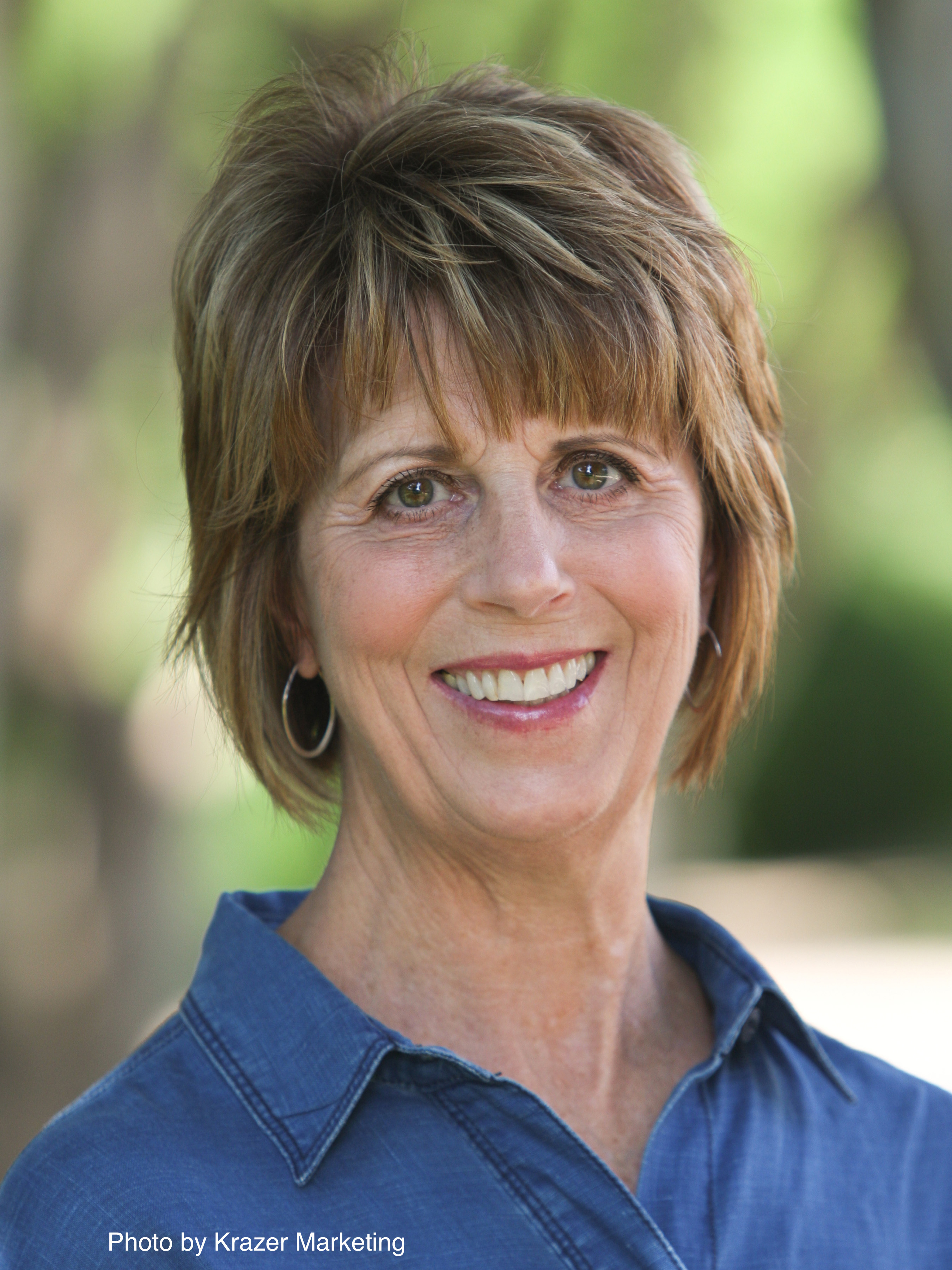
Jason Platt

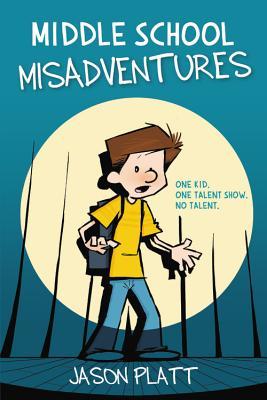
Graphic novels are a big deal in the publishing world right now, and I’ve been anxious to find out more about them. Fortunately, there’s some really great graphic novelists out there, Jason Platt being one of them. His debut graphic novel Middle School Misadventures hit the shelves in April of this year. My family purchased our copy and it’s already been read multiple times. In my budding graphic novel nerdiness, I was especially impressed with how well he positioned his dialogue tags–no easy task. It’s with great pleasure, that I present Jason’s excellent insights on graphic novels with hopes of more GN news to come.

Thank you, Jason!

What got you started writing and illustrating graphic novels? 

It’s funny, because I never really saw myself doing graphic novels. I had been doing my webcomic “Mister and Me” for a number of years, and even though that is close to a graphic novel, its structure is handled differently. In a traditional comic strip, you have four panels to tell part of a story and where it usually ends with some sort of punchline. But with a graphic novel you have time to really tell all of the story, and develop the characters more. It’s really nice.

41155065

Originally, I had started to write what is now called “Middle School Misadventures” as a book that is similar to, let’s say, Big Nate or Diary of a Wimpy Kid kind of style. Where it was written with prose and then a spot illustration mixed throughout the whole thing. When my agent approached editors with it, we got some positive responses, however, one editor suggested making it into a full graphic novel and asked if I was interested in changing its format. Immediately I said yes, of course. It would flow really well with how I tell stories anyway. But I also knew that the job would be that much harder to complete. There is a lot more construction and organizing that’s involved. But once I got started, I knew it was the right direction to go.

So it wasn’t necessarily something that I was aiming for, but it was a storytelling device that I was able to fall into easily.

What is it that appeals to you about graphic novels?

Very similar to the first question. I think what’s really nice about the graphic novel format is being able to harness any character development and show that in a visual form. And also not have the limitations of a traditional comic strip panel sizes. In other words, it’s so nice to be able to dedicate a whole page for one moment and use that to express the impact that the story may have. And usually, it helps with the excitement or the punchline of a funny moment that is happening.  

Who are some of your inspirations? Continue reading

Interview for StoryTeller Academy

DSC_0268

Happy New Year one and all. The holidays are often a busy time, so I will start this off with a short post and interview with Myrna Foster at Storyteller Academy who was kind enough to ask me some questions about my writing journey and what I’ve learned.

You can find that interview here: https://www.storytelleracademy.com/2019/01/02/member-stories-johnell-dewitt/

And I want to give you all a heads up about the Writing With the Stars mentorship contest that will be opening up for submissions on January 9, so read the rules at the link and get your submissions ready.

Wishing you all a glorious new year.


Interview with Author Penny Parker Klostermann

klostermann_pennyPenny Parker Klostermann is the author of There Was an Old Dragon Who Swallowed a Knight and A Cooked-Up Fairy Tale (Random House Children’s Books, illustrated by Ben Mantle). She has an informative website with gobs of great info about poetry and rhyme. She recently made a comment on my art notes post that I thought deserved its own space, so I asked if she’d answer some questions for me. She’s given back to the writing community in so many ways, and I’m grateful she took time out to teach us what’s she’s learned about art notes and rhyme.

Thank you, Penny, for your time!

Note: When I got Johnell’s interview questions, she asked about two things — art notes and rhyme. These are two topics that come up often in the picture book writing community. And these are two topics that I had many questions about when I started writing. 

The ONLY reason I have published books, and that I think I have some insight to share, is that while I asked questions and thought about the answers, I worked on my craft. I don’t feel any advice will make much sense or help you unless you’re constantly working on and improving your craft to apply the advice.

Think about all the advice, rules, and information that we hear about writing picture books: 

  • Word count
  • Voice
  • Character development
  • Plot
  • Theme
  • Pacing and page turns
  • Art notes
  • Queries
  • Arc
  • Etc.

I wouldn’t have gained understanding about any of these things, if I’d just read articles and blog posts and asked questions.

Continue reading

A Shell Apart

IMG_8052

We made another international move recently. I gave myself permission to leave my site alone during that time and focus on the needful. We’re still clearing away the dust, but a few glimmers of time have given me space to write something that’s been on my heart.

We visited the beach near our house the night after we arrived. I still love looking for shells, so I combed the beach collecting dozens of pretty, white shells with maroon ribbings.

I soon had both hands full, but I continued to pick up any shell that caught my eye. As I went on, I became pickier–if the shell was cracked, incomplete, or looked too similar to ones I already had, I immediately passed. I left behind a beach-full of perfect, shiny shells. I just didn’t have room to add one more of the same kind of shell to my already full pile.

I kept my eye out, though, for a different kind of shell. Eventually, I found one. It wasn’t shiny or uniform like the others, it was irregular and matte, but it drew my attention because of that. I slid my overflowing shell pile into the crook of my t-shirt so I could pick it up.

I rubbed my thumb over it–rough, not smooth, and not the usual half-clam shape at all. Because of its asymmetry, I wasn’t sure it was a complete half until I felt the smoothness of the edges–then I turned it over and gasped.

Before I finish that thought, I’ll interject something more prosaic: I was, in fact, thinking about writing as I was hunting for shells. Agents and publishers hunt through a sea of lovely stories that meet the highest of standards, but don’t have room to add another like-mannered manuscript to an already over-loaded pile of shiny, maroon shells.

So when I stumbled upon this sort of seemingly bland, but distinct shell, I could see how an agent or editor might feel when a story stands out. I just had to examine this shell–it was so different from all the others. I shifted things around so I could pick it up. And blessedly, its oddities were even more intriguing up close: it’s curved but complete shape, rough but well-suited texture, and its matte but intense color. Then when I turned it over and found the whole underside coated with glorious mother-of-pearl, I was hooked, line and sinker into its unexpected beauty. You can bet that I made room for that shell.IMG_8053

It’s my favorite shell so far. I keep it by my bed to remind me that uniqueness matters, but if your story has that spark of something special–that mother-of-pearl coating–it will become a keeper.


The Cat Sent My Query: And Other Cautionary Advice

lucy and rocco
It’s true, there I was pulling up my query that I’d been marinating for a few days–re-reading, re-tweaking, resting to read again. That day was the day–I’d done everything I could think of to personalize it, tighten it, make it shine, oh, except for that one line and this word and this one…

Right in the middle of changing a word, my foster kitty decided to attack. 

The swirling cursor of doom assured me that her pounce had hit the send button. Once the swirl’s hypnotic effect wore off, it took all of one second to realize that my query had been sent—mid-change and missing the rest of the sentence. 

At that point, I figured that all illusion of professionalism had tucked tail and fled, so sent another email explaining what the missing sentence should have said and, btw, my cat had sent the query. 

Continue reading