
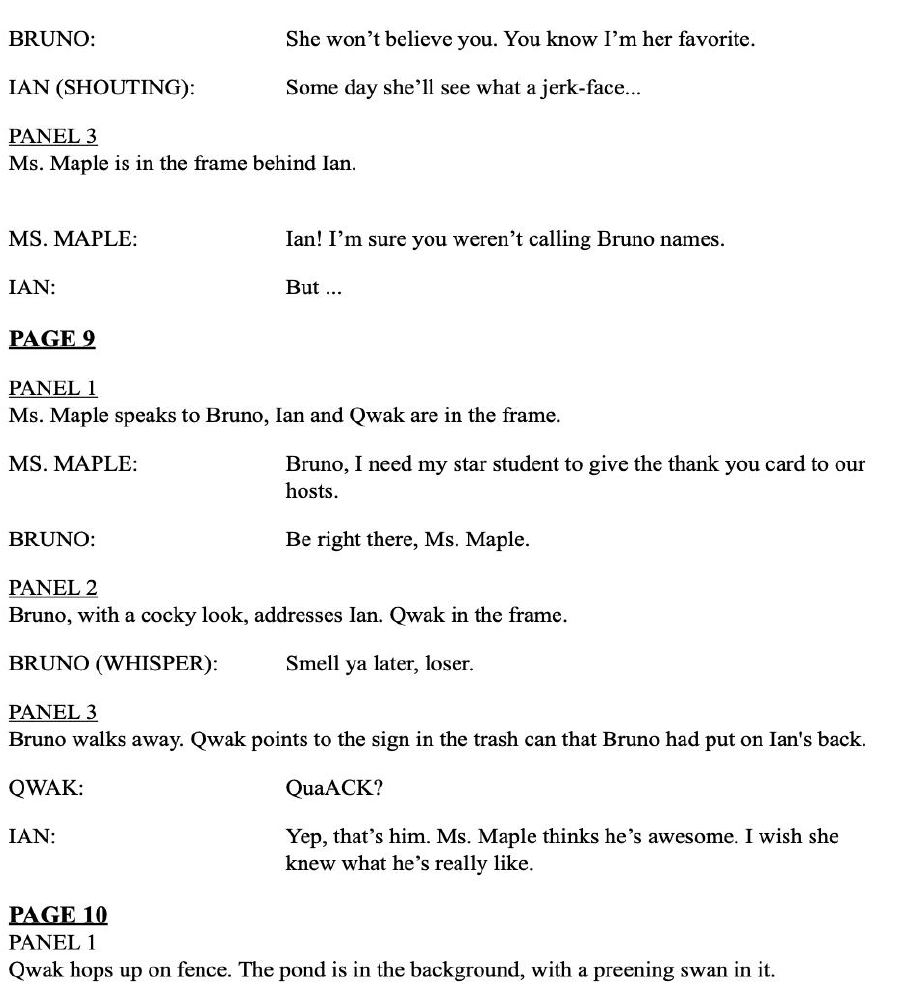
One of the most popular posts on my website relates to illustration notes for picture books. My first kidlit love was picture books, but after writing several picture book drafts that skewed longer and older but still needed art to tell the story, I knew graphic novels were a better format.
Writing picture books is a good lead into writing graphic novels, but there are differences. Collaborating with two illustrators on the Kids Comics Studio anthology has helped me better understand how to write comics-styled scripts.
“Runaway Train” is the short comic that Maggie Shang and I have collaborated on for the anthology.
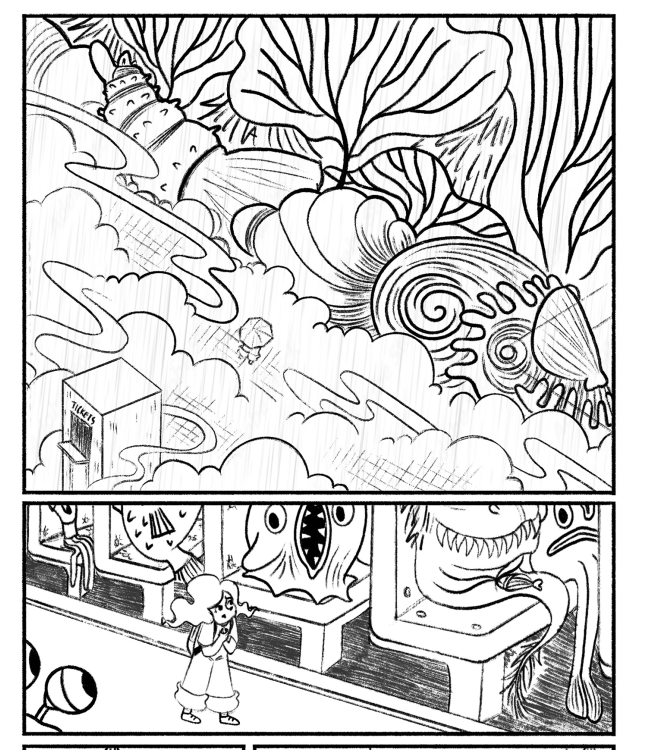
This script underwent several changes to fit it into the 8-page limit. I would write, Maggie would draw, and once we had the two together, we would find that the pacing of the art and the story weren’t fitting within the space constraints (a reality for many projects). We went through a few drafts until we were both comfortable with the outcome. Major props to Maggie for all her drafts.
My take-aways from this experience:
- Be mindful that both the art and the story need their own pacing.
- Your script will likely take more space to draw than what you’ve outlined.
- Keep captions and dialogue short.
- Space any text that is too long for one panel over multiple panels, but make sure the sentences can flow easily from one panel to the next, and that the text is truly needed.
“Junk Wars,” my other collaboration with Cesar Lador was a different process.
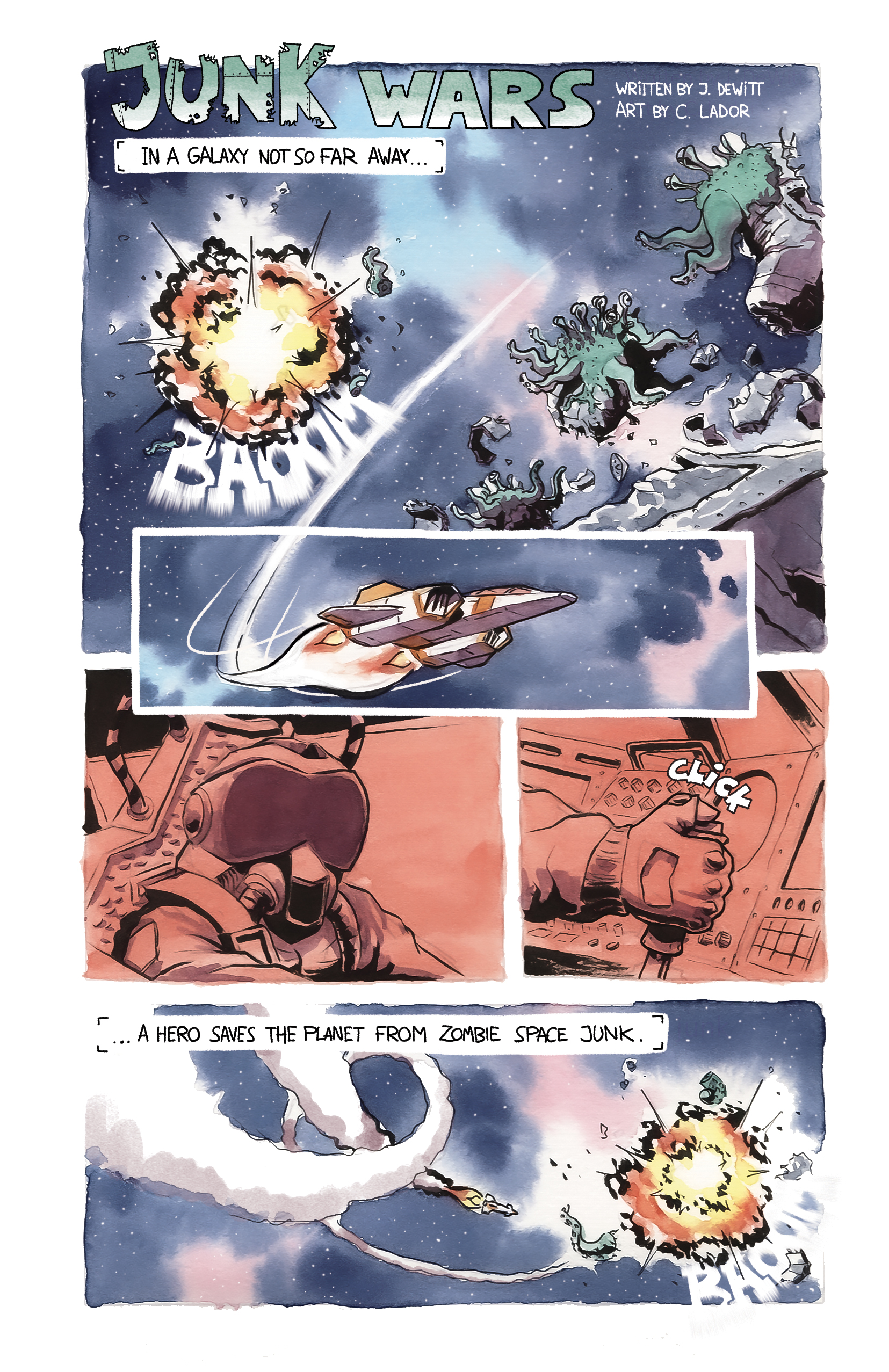
I wrote a few different scripts based on the initial premise and then we went back and forth until the story was where we both wanted it to be. My take-aways from this:
- There is more than one way to collaborate.
- Being able to adapt to the styles and needs of each illustrator makes collaborating more successful.
- Flexibility creates synergy. Synergy enhances creativity.
- Write with the art in mind. For example, too many talking heads aren’t fun to draw.
Doing graphic novels as a writer is tricky. In a KCU webinar with Kazu Kibuishi, he said that writers trying to break into the kidlit world need to play to their strengths, which is writing. Once you’ve got a published novel under your belt, it’s easier to make the case for writing graphic novels.
Like picture books, creating graphic novels as a writer means the art must be there for your story to make sense. But if you can tell the story without pictures, then do that. I do write middle grade novels, and I love the freedom to create pictures with words, but I still love writing stories that need that marriage of art to fully flesh them out.
It has been an absolute treat working with Maggie and Cesar on these comics, and I can’t wait for you all to see their hard work in full color. Keep watching for our crowdfunding launch in April where we’ll feature more sneak peeks of my collaborations plus the 28 other stories coming out in the Let’s Go!: A Kids Comics Studio Anthology.
Sign up for our anthology newsletter here: https://kidscomicsunite.com/anthology/newsletter/
 johnell dewitt
2 thoughts on “Crafting Graphic Novels: A Writer’s POV”